Panoramic: Automotive and Mobility 2025

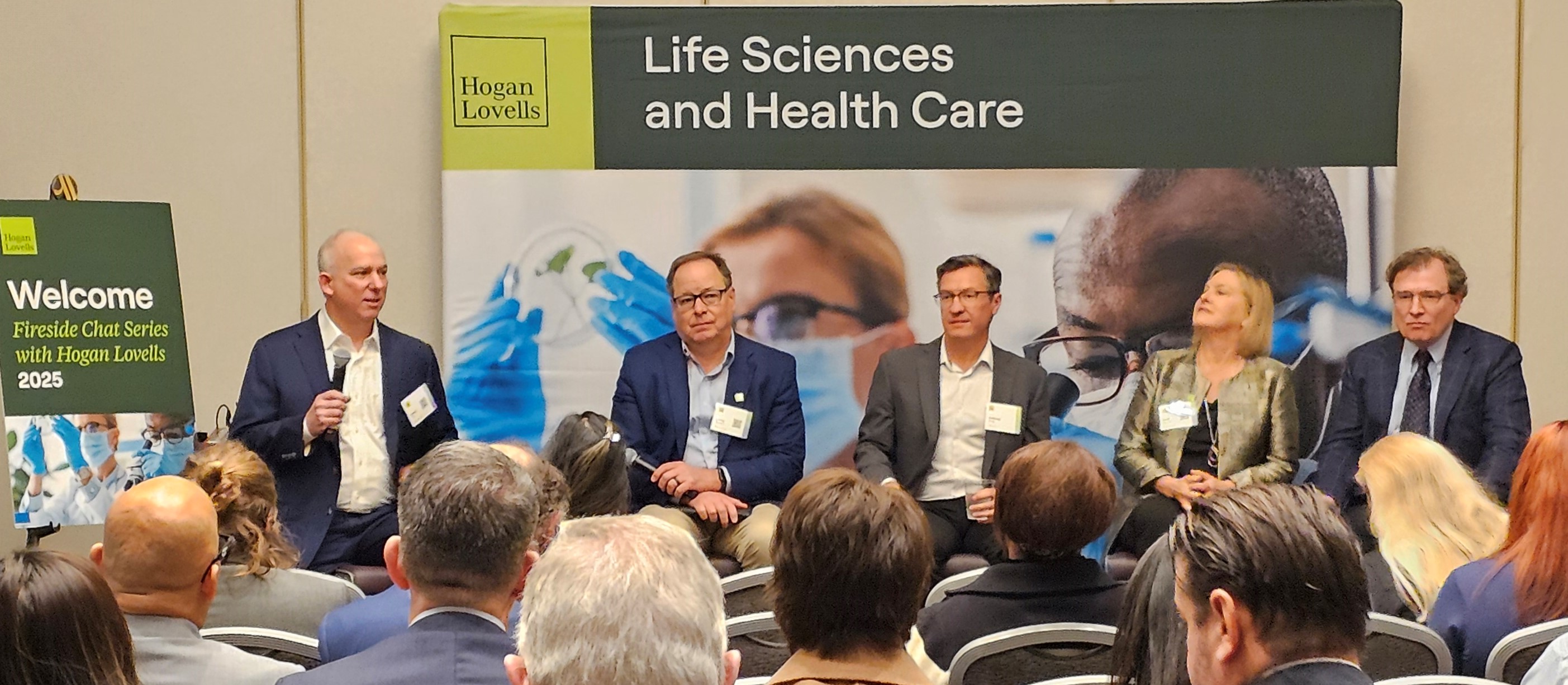
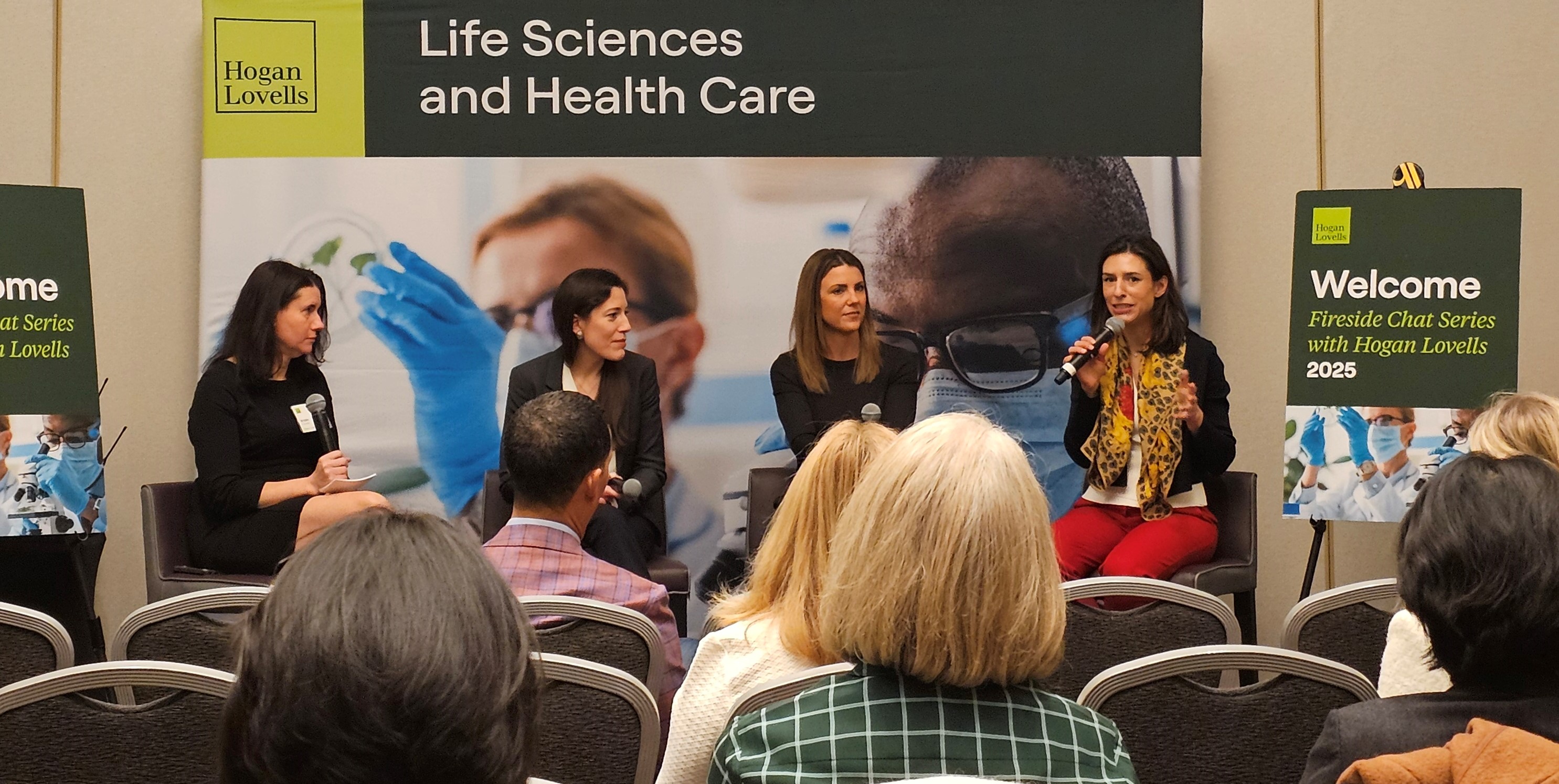
As life sciences companies expand internationally, regulatory readiness must evolve into a strategic capability that supports global business planning and innovation. Speaking at the 2026 J.P. Morgan Healthcare Conference, Hogan Lovells medical device & technology regulatory partner Jodi Scott moderated a panel discussion with HL corporate & finance partner Lu Zhou, HL government contracts partner Joy Sturm, and Medtronic Chief Regulatory Officer Yarmela Pavlovic. Panelists examined a range of international developments, such as themes in AI & digital health oversight, and the impact of horizontal legislation such as the EU AI Act and U.S. state laws. The panel forecast major global regulatory shifts in 2026, speculating over the impact of the BIOSECURE Act, persisting tariffs, China's Human Genetic Regulations (HGR), and the growing complexity of supply chains amid rapid technological advances.

Jodi Scott, partner in the Hogan Lovells medical device & technology regulatory practice, kicked off the panel discussion by asking the J.P. Morgan panelists what significant changes they see coming down the pike in 2026. Joy Sturm, partner in the Hogan Lovells global regulatory practice, predicted an increased focus on supply chain security and onshoring. As evidence of this, she pointed to the recent passage of the BIOSECURE Acta law intended to restrict collaboration between companies doing business in the U.S. and biotechnology “companies of concern,” that are determined to have links to foreign adversary governments. Sturm also stated that tariffs will continue to be a significant concern,” noting that the sector currently awaits the outcome of a Section 232 investigation into biopharmaceuticals. Relatedly, Sturm predicted that company representations relating to the “country of origin” of their products – relevant both to trade and government contract compliance – will continue to be top of mind given a marked increase in government scrutiny in this area.
Lu Zhou, partner in the Hogan Lovells corporate & finance practice, observed an “unprecedented” acceleration of regulatory reform in the People's Republic of China (PRC), including speedier approval timelines for both pharmaceuticals and medical devices. For breakthrough therapies in particular, “expedited approval times in China have been cut in half,” Zhou informed the J.P. Morgan audience. She also said the PRC is increasingly accepting use of real-world evidence (RWE) in regulatory applications, as China aims to attract more pioneer companies to launch their products in the country (or at least to launch concurrently in the U.S. and international markets).
China is also tightening its data security regulations, Zhou explained, citing how the Human Genetic Regulations (HGR) are in effect; that legislation resembles BIOSECURE, with a focus on the domestic handling of Chinese genetic data. In the artificial intelligence space, China is also striving to be a market leader, she added. For medical devices, clinical studies can be conducted in some of the special zones in the PRC (e.g., the Greater Bay Area) with fewer restrictions than other cities in China may impose, Zhou said, describing how China is encouraging drug and device companies alike to localize their research and manufacturing.
Adding to the overarching global regulatory trends noted by the other panelists, Yarmela Pavlovic, Chief Regulatory Officer at Medtronic, observed a “convergence of regulatory expectations,” and a continued trend towards regulators leveraging reliance as a tool, which she predicted make it easier to navigate global medical product commercialization in 2026.
On the other side of convergence, Pavlovic described how the evolving nature of technology is driving both uncertainty and novel regulatory policy. Scott agreed that as “revolutionary AI” is being fully implemented in 2026, there will be new regulatory challenges facing medical device manufacturers. For example, Scott predicted that life sciences companies will need to expand their documentation procedures to meet global compliance standards in the years to come.
Asked about evolving inspections standards, Scott described how FDA is utilizing their improved databases – as well as new AI tools – to target their investigations. Meanwhile in China, Zhou said the National Medical Products Administration (NMPA) tightened the lifecycle oversight over the life sciences products and continues to focus on enforcement actions against life sciences companies, particularly over data integrity issues.
Comparing the timing of medical product approvals across geographic regions, Sturm observed an increasing focus on the potential to launch in China, but also that this comes alongside increasing concern over data and trade restrictions on the PRC. Scott agreed that with a long history of manufacturing and research in China, it becomes difficult to imagine de-coupling from those markets. Zhou outlined how she advises international companies doing business in China to analyze their supply chains, and diversify their suppliers when necessary. Global regulator staffing concerns also remain an issue to watch in 2026, Pavlovic noted, explaining that these concerns persist globally. For example, as the final deadlines for EU MDR approach, it is unclear whether Notified Body bottlenecks will re-emerge.
Medical devices will also need to undergo an additional conformity assessment before being placed on the EU market in compliance with the EU AI Act, Pavlovic explained, noting industry is watching the final implementation of those requirements to understand the costs and time that can expected. Pavlovic said she is also watching other countries, such as South Korea, implement similar regulations to EU's cross-sectoral AI Act. In the U.S., Scott pointed out, state regulations may also be enacted to regulate different aspects of AI and some of them will affect medical technology. “Geography is important, and each country may have their own approach.”
In China, regulation of AI-enabled medical devices is more “organized,” central, and comprehensive, Zhou told the J.P. Morgan crowd, outlining how data security requirements may be strict, and how province-level governmental bodies oversee the flow of data in real time. Zhou further advised that regulations in China may change quickly, suggesting that life sciences companies should stand up SWOT teams to ensure compliance proactively. In addition, where special zones are set up in China with unique regulations, companies should try to take advantage of beneficial exemptions, which may advance early engagement with the Chinese government.
Drawing on her experience working on compliance matters with companies conducting business globally, Sturm emphasized the importance of building clear lines of communication. She said: “As regulation increases exponentially, focus on these internal channels is critical.” Pavlovic concurred that systems to enhance the flow of information internally are vital for a medical device company's success.
Concluding the panel conversation, Pavlovic is encouraged to see global regulators starting to synchronize their medical product reviews through global reliance frameworks – and increasingly relying on other regulators' decisions – leading to some substantial reductions in regulatory barriers to companies expanding internationally. “It's a big, complicated world, with lots of potential challenges – but there's significant opportunity as well.”
The annual J.P. Morgan Healthcare Conference provides a unique opportunity to make connections among life sciences and health care emerging companies, pharmaceutical & biotechnology firms, digital health companies, medtech sponsors, investors, and advisors. The article above is part of our JPM 2026 “Fireside Chat” series of presentations, through which our team of attorneys spoke with stakeholders at the conference about the most critical global health care issues emerging today.