Panoramic: Automotive and Mobility 2025

Speaking at the 2026 J.P. Morgan Healthcare Conference, Hogan Lovells global regulatory partners Elizabeth Jungman and Brian Carey moderated a panel discussion with U.S. Food and Drug Administration (FDA) Deputy Chief of Staff Samuel Doran and FDA Office of the Commissioner Senior Advisor Karim Mikhail. They discussed the agency's priorities for 2026, workforce changes, national security concerns, and FDA's goal of accelerating medical product approvals. The panelists described expanding collaboration with HHS, global regulators, and venture investors, especially on issues like biosimilar reform, drug pricing, and government procurement. They touched down on FDA's publication of complete response letters, rare disease regulatory paradigm shifts, and the Commissioner's National Priority Voucher (CNPV) and FDA PreCheck.
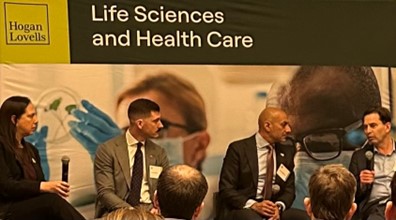
Kicking off the J.P. Morgan panel conversation on FDA’s policy priorities for 2026, Elizabeth Jungman, partner in the Hogan Lovells pharmaceutical & biotechnology practice and former FDA chief of staff, asked the agency panelists about the changing government workforce. Samuel Doran, deputy chief of staff at FDA, described a recent uptick in hiring at FDA, noting that the agency has approved 67 new products in the past year. He further outlined how FDA’s publication of complete response letters (CRLs) is a fulfillment of the Trump administration’s promise to enhance government transparency, emphasizing how information contained in CRLs is important to biopharmaceutical companies when they’re attempting to ascertain what’s necessary on the regulatory front. “We’re cutting red tape,” while “maintaining absolute goal standards,” he said.
Asked about FDA’s priorities heading into the new year, Karim Mikhail, senior advisor in FDA’s Office of the Commissioner and a former biopharma CEO, spotlighted three priorities the agency is prioritizing in 2026: accelerating approvals, modernizing the FDA, strengthening National security and doing so while placing American patients at the center of the work.
Reviewing the agency’s scientific standards, Mikhail stressed the importance of preserving goalposts. Whereas demonstrating “substantial evidence” (SE) has historically required two studies, Mikhail explained FDA is increasing in the flexibility of its regulatory paradigms by permitting only one study to demonstrate SE, as long as it delivers the expected level of statistical significance. “FDA is leading the response to evolving market dynamics,” and not merely thinking in black-and-white, he added. Drilling down into the rare disease space, Mikhail highlighted the uniqueness of cell & gene therapy regulatory standards. With many flexibilities offered already, FDA is now educating drug and biologic sponsors regarding these flexibilities and how they can speed approval of cell & gene therapies, he explained.
For sponsors incorporating artificial intelligence in drug development, “you’re going to see a lot coming out in the future” from FDA explaining its regulatory paradigms, Doran previewed. In addition, he expressed excitement over how FDA is using AI in its own decision-making, citing “Elsa,” and how FDA is the first government agency to utilize agentic AI. In the long term, Doran forecast, FDA is focused on cutting medical product review time, and “AI could be the icebreaker to plow through the gridlock.”
Doran also emphasized the agency’s prioritization of early engagement with sponsors – including having more “hard conversations” with regulators sooner in the process.
Asked about the scope of FDA’s new Commissioner’s National Priority Voucher (CNPV) program, Doran told the told the J.P. Morgan audience: “We are keeping a close eye on the program to ensure it does not impact any products that are not in the voucher program.” Regarding CNPV approval standards, “it remains the same gold standard,” Doran added.
Echoing the importance of the CNPV program, Mikhail described how FDA is working to incentivize – including through financial levers – expedited, earlier clinical development, as well as manufacturing that is completed in the U.S. He cited how the agency has removed the requirement for animal testing to accelerate approvals. FDA is working hard to executive “transformational” regulatory change, he said. In addition, Mikhail outlined how FDA PreCheck will help companies anchored in the U.S. get their products to market faster by decreasing regulatory barriers to manufacturing.
Shifting the conversation to FDA partnerships with the broader Health and Human Services Department, Brian Carey, partner in the Hogan Lovells health care practice, asked about recent interagency collaboration efforts. In the drug pricing arena in particular, Carey noted collaboration on biosimilar regulatory reform. “It is critical that the patient has options,” Mikhail responded, emphasizing how FDA – and other U.S. regulators – are working to permit more medical products to access the market, and to lower costs for patients.
Another tool in drug pricing reform is the “Most Favored Nation” (MFN) policy, Carey pointed out, asking the panelists how they see these regulatory shifts playing out in the coming year. Doran said FDA will be incentivizing greater domestic medical development in the coming years. Mikhail described how the exchange of information between FDA and other global regulators – including the European Medicines Agency (EMA) – far exceeds what he expected prior to joining the agency.
Carey also asked the panelists about FDA’s December RFI seeking input from venture capital firms on developing a new government contracting. Outlining challenges unique to public procurement, Doran said FDA aims to assuage difficulties inherent to marrying the agency’s needs with the potential value-add from smaller companies, which are not always well versed in government contracting procedures. For example, “FDA has millions of pages that need to be digitized,” and the agency is working to identify the best company with whom to partner on this project. Similarly, for remote inspection procedures, Doran said FDA “wants to know what they don’t know.” He concluded: “We really do want to hear from people.”
Note: The views expressed here and during the panel conversation are the speakers’ personal opinions and do not necessarily reflect the official policies, positions, or endorsements of the U.S. Food and Drug Administration. Any statements should be understood as informal, non‑binding commentary, and not as agency guidance or regulatory direction.
The annual J.P. Morgan Healthcare Conference provides a unique opportunity to make connections among life sciences and health care emerging companies, pharmaceutical & biotechnology firms, digital health companies, medtech sponsors, investors, and advisors. The article above is part of our JPM 2026 “Fireside Chat” series of presentations, through which our team of attorneys spoke with stakeholders at the conference about the most critical global health care issues emerging today.